
Discover how AI is changing Digital Marketing in 2026. Learn AI’s impact on SEO, content, ads, and personalization with real examples. Artificial Intelligence (AI) is no longer a future concept — it is actively reshaping how Digital Marketing works in 2026. From content creation and SEO to paid ads and customer experience, AI is helping marketers work faster, smarter, and more efficiently.
For beginners, this rapid change can feel confusing. How does AI really impact digital marketing? Which tasks are automated? And how can businesses use AI without losing the human touch?
In this beginner‑friendly guide, you’ll learn how AI is changing digital marketing in 2026, explained in simple language with real‑world examples.
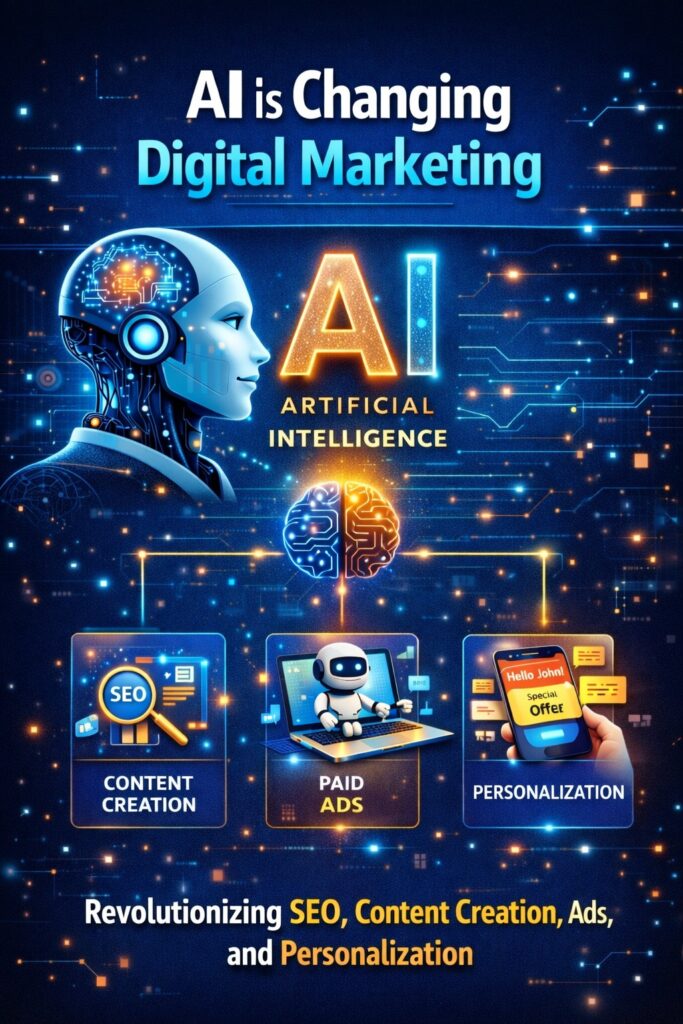
What Is AI in Digital Marketing?
AI in digital marketing refers to using machine learning, data analysis, and automation tools to understand user behavior, predict outcomes, and optimize marketing strategies.
Instead of manual guesswork, AI analyzes massive amounts of data to help marketers make better decisions.
1. AI Is Transforming SEO
SEO is one of the biggest areas impacted by AI.
How AI helps SEO:
- Understands search intent, not just keywords
- Improves content relevance
- Helps optimize pages faster
Real example:
Google’s AI‑based algorithms focus on helpful, people‑first content. Tools powered by AI can suggest topic clusters, internal links, and content improvements based on user behavior.
Beginner tip: AI doesn’t replace SEO fundamentals — it enhances keyword research, content optimization, and technical SEO.
2. AI‑Powered Content Creation
AI tools are widely used to support content writing, but quality still matters.
What AI can do:
- Generate content ideas
- Create outlines and drafts
- Improve grammar and readability
Real example:
Marketers use AI to create blog drafts faster, then edit and add human expertise to make content more helpful and original.
SEO note: Google rewards content written for users, not content created only to rank.
3. Smarter Google Ads & Paid Campaigns
AI has completely changed paid advertising.
How AI improves ads:
- Automatic bidding strategies
- Better audience targeting
- Real‑time performance optimization
Real example:
Google Ads uses AI to show Google Ads uses AI to show ads to users most likely to convert, based on behavior, location, device, and intent. This reduces wasted ad spend and improves ROI.
4.AI in Social Media Marketing
Social media platforms rely heavily on AI algorithms.
AI helps by:
- Identifying trending content
- Suggesting best posting times
- Improving audience targeting
Real example:
Instagram and Facebook use AI to decide which posts appear in users’ feeds, based on engagement signals.
5. Personalization at Scale
AI allows marketers to personalize experiences for thousands of users at once.
Examples of AI personalization:
- Product recommendations
- Personalized emails
- Customized landing pages
Real example:
E‑commerce websites show different product suggestions to users based on browsing history and behavior.
6. Chatbots & Customer Support
AI‑powered chatbots improve customer experience.
Benefits:
- 24/7 customer support
- Instant responses
- Reduced support costs
Real example:
Websites use chatbots to answer common questions, book appointments, and guide users — improving conversions.
7. Data Analysis & Predictive Marketing
AI makes data actionable.
What AI analyzes:
- User behavior
- Conversion patterns
- Future trends
Real example:
AI tools predict which leads are more likely to convert, helping marketers focus on high‑value users.
Advantages of AI in Digital Marketing
- Saves time and cost
- Improves decision‑making
- Better targeting and personalization
- Scales marketing efforts easily
Limitations of AI in Digital Marketing
- Cannot replace human creativity
- Over‑automation can reduce trust
- Requires quality data
- Needs human review and strategy
How Beginners Can Start Using AI in Digital Marketing
- Learn SEO and marketing fundamentals first
- Use AI as a support tool, not a replacement
- Focus on user experience and content quality
- Keep up with Google updates
Final Thoughts
How AI Is Changing Digital Marketing in 2026 is reshaping the way businesses connect with their audience, automate campaigns, and make data-driven decisions. However, real success still depends on strong strategy, human creativity, and building long-term trust with users. Businesses that understand how AI Is Changing Digital Marketing and smartly combine AI tools with human expertise will stay ahead of the competition. For beginners, learning how AI works in SEO, content creation, paid advertising, and personalization provides a powerful advantage in today’s fast-evolving digital world.
FAQ’s
No. AI supports digital marketers by automating tasks, but human creativity, strategy, and decision-making are still essential.
Yes, AI content is safe if it is original, helpful, edited by humans, and written for users rather than search engines.
AI helps with keyword research, content optimization, search intent analysis, and technical SEO improvements.
No, beginners should first learn digital marketing basics. AI tools can be used later to improve productivity.